Open house visitor management: the complete agent guide
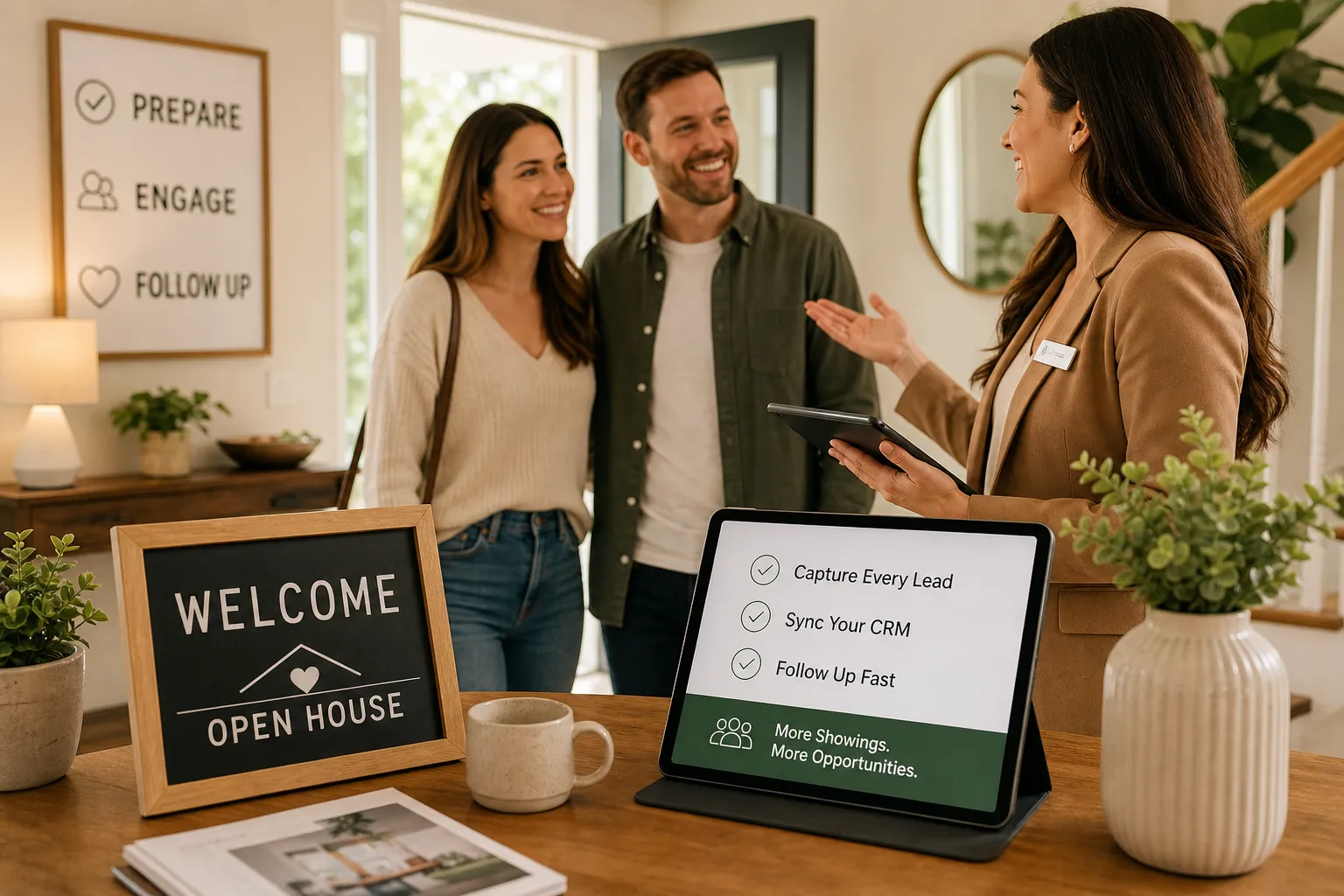
Picture this: you host a Saturday open house, thirty people walk through, the kitchen conversation is buzzing, and by Sunday night you're squinting at a paper sign-in sheet with six legible emails and zero context about any of them. You don't know who was pre-approved, who is moving in sixty days, or who was just a curious neighbor. That gap between foot traffic and real pipeline is the core problem with how most agents handle open house visitor management today.
This guide covers the full workflow, from the moment someone walks through the door to the follow-up call that turns them into a client. You'll learn how to set up a frictionless check-in, track visitors in real time, compare the top tools on the market, and get leads into your CRM before your competition finishes packing up their sign riders. Purpose-built tools like Foyer were designed specifically to close this gap, and you'll see exactly how that works throughout the article.
Why most open houses leak leads before the last visitor leaves
Most agents lose open house leads not because visitors aren't interested, but because the check-in process captures too little information too late. A paper sign-in sheet at the door might collect a name and email. What it won't tell you is whether that person is pre-approved, actively searching within thirty days, or just killing time before brunch. Without that context, every visitor looks the same, and you end up calling the neighbor before you call the buyer.
The real cost of a clipboard at the door
By the time you transcribe names into a spreadsheet Sunday night, the window for same-day follow-up is already closed. The most-cited research on this, the Lead Response Management study, measured how sharply the odds of reaching an inbound lead fall once you pass the first few minutes. It is worth reading the study before quoting a figure from it, because the number is often repeated as a conversion statistic and that is not what it measured. A paper sign-in doesn't just slow you down. It makes prioritization impossible, because you have no data to prioritize with.
Think about what a clipboard actually misses: buyer intent, financing status, purchase timeline, and whether the visitor is already working with another agent. Those four data points determine whether someone gets a call tonight or a drip email next week. Without them, every follow-up is a cold guess.
What a complete visitor record actually looks like
A useful check-in captures five things: name, contact info, buyer timeline, lender or financing status, and whether the visitor is represented by an agent. Each one carries specific follow-up value:
- Timeline tells you urgency, is this someone buying this month or browsing for next year?
- Financing status tells you readiness, pre-approved buyers deserve priority attention.
- Agent representation flags leads that need careful handling and sets expectations for follow-up.
Together, these fields let you rank visitors by real buyer strength rather than by who happened to sign in first. This is the foundation of effective open house visitor management, and it starts before anyone tours the living room.
How to build a check-in flow visitors actually complete
Friction is the enemy of completion rates. The longer or more complicated your sign-in process, the more visitors skip it entirely. A well-designed digital check-in takes under sixty seconds, works on any smartphone, and requires no app download. That combination removes every common barrier to entry.
QR code vs. kiosk vs. text-to-sign: which method works where
QR code check-in is the most flexible option. Visitors scan a code at the entrance using their own phone, complete the form, and hand nothing over to the agent. No app download is required, which eliminates a significant adoption barrier. QR works well at virtually any property size and requires no dedicated device.
Kiosk mode, typically an iPad placed at the entry table, works better for high-traffic properties where a dedicated check-in station makes sense. It gives the process a polished, intentional feel. The tradeoff is that you're managing a device, a charge cable, and software reliability throughout the event. Text-to-sign can feel seamless for visitors who prefer it, but it depends on reliable cellular connectivity and may not suit every demographic. Most modern visitor sign-in apps support all three methods, so the choice usually comes down to your property setup and the comfort level of your expected visitors.
The five fields worth capturing (and the ones that hurt completion)
Shorter forms convert better. Stick to name, email, phone, buyer timeline, and financing status as your core five. These fields give you everything you need to prioritize follow-up without overwhelming visitors who are still putting their shoes back on. Adding fields beyond these five drops completion rates noticeably, and every skipped submission is a lead you'll never recover.
One critical boundary: never include questions that touch on protected characteristics. Race, national origin, religion, family status, and disability are off-limits, and so are questions that could indirectly reveal them. Objective questions about buying criteria are fair game. Fair housing compliance isn't just a legal concern, it's a workflow design decision, and we'll return to it in the compliance section.
Open house visitor management: tracking visitors while the event is running
Most sign-in tools are passive. They collect data and wait for you to review it later. The difference between passive capture and active tracking is the difference between a list of names and actionable intelligence you can use while visitors are still in the house.
How buyer priority scoring works during a live event
Automatic buyer scoring works by weighing timeline, lender status, and search fit the moment someone submits their check-in. When the couple who just walked into the kitchen is pre-approved, buying within sixty days, and searching in this exact price range, you know it within thirty seconds. That changes your conversation from small talk to substance. Foyer builds this scoring into the check-in workflow automatically, flagging represented buyers and keeping the criteria tied to objective buying factors, not personal characteristics, which keeps the process fair-housing compliant by design.
What team leaders need to see across multiple open houses at once
When a team is running three or four open houses on a Saturday, a team leader can't be everywhere. A live dashboard that shows real-time check-ins, buyer scores, and follow-up flags across every property simultaneously changes that. Instead of managing from memory or waiting for Sunday evening check-ins from agents, a team leader can see exactly what's happening at each address, which visitors have been flagged as high priority, and which agents are working their leads. This is where purpose-built open house lead capture software separates from general-purpose sign-in tools.
The top open house visitor management tools compared
The market has a clear split between free tools built for individual agents and more robust tools built for how teams actually operate. Knowing which category a tool falls into saves you from buying the wrong solution for your workflow.
Free and entry-level options worth knowing
Curb Hero is a widely recommended free option for solo agents. It handles offline sign-in, QR code check-in, and syncs with many CRMs through Zapier or direct integration. Open Home Pro offers a free tier with simple automated follow-up emails and a paid premium upgrade. Showable is a browser-based all-in-one tool (free and Pro tiers) that covers scheduling, QR registration, custom branding, and real-time reports in one place. Spacio is a strong entry-level option for teams, with CRM sync into Follow Up Boss and kvCORE and solid reporting features. Pricing on all of these moves, so check the current pricing page before you budget for one.
These tools handle data capture reliably. Where they tend to fall short is buyer scoring, live multi-property visibility for team leaders, and seller-ready reporting. They'll get names into your CRM. They won't tell you which names matter most.
Why purpose-built tools like Foyer close the gap for real estate teams
Foyer was built by a licensed real estate agent who understood that the gap between a paper sign-in and an actual CRM lead was costing teams money every weekend. Foyer is the open house check-in app for real estate teams. Not a sign-in sheet. It handles the full workflow across four stages: QR-based check-in that works on any phone with no app download; automatic buyer priority scoring the moment someone submits; a live team leader dashboard showing every open house running simultaneously; and seller-ready PDF reports generated automatically when the event ends. Those seller reports display buyer strength metrics without exposing any visitor's personal information, a detail sellers genuinely appreciate.
Foyer routes scored leads into Follow Up Boss, Lofty, and kvCORE through a webhook you connect once, with agent attribution already attached, so your CRM gets clean, structured data rather than a pile of names someone has to sort manually. A 14-day free trial is available with no credit card required, and it is designed to get you up and running quickly. For teams running multiple open houses every weekend, it's a purpose-built solution that matches that operational reality in a way that general sign-in tools don't.
Getting leads into your CRM and following up before your competition does
A check-in is only as valuable as what happens next. Leads sitting in a dashboard are not pipeline. Getting leads routed into your CRM, with context, priority tags, and agent attribution already attached, is what turns a busy open house into actual business.
Automatic CRM routing and why attribution matters
When a lead flows from sign-in into the CRM without attribution, it becomes a loose contact that no one owns. Team leaders can't tell which agent worked which visitor, accountability disappears, and follow-up stalls. Proper routing attaches the hosting agent's name, the property address, the buyer's priority score, and the check-in timestamp before the lead ever lands in Follow Up Boss or kvCORE. That context is what makes the follow-up call specific instead of generic.
Foyer posts every scored lead to a webhook the moment a visitor checks in. You connect it once, using your CRM's inbound integration or a Zapier or Make hook, and every check-in arrives in Follow Up Boss, Lofty, kvCORE, or a Google Sheet with the agent, the property, the score and the timestamp already attached. If no webhook is set, hosting agents get their leads by email instead, so nothing is stranded while you are setting up.
Follow-up timing and the seller report that proves you showed up
Speed-to-lead matters more in real estate than almost any other industry. Hot leads, pre-approved buyers with a short timeline, deserve a call or text within the first two hours. Warm leads should hear from you the same evening. Every visitor, regardless of priority score, should receive a first touch within twenty-four hours. That cadence, applied consistently, is what separates a busy open house weekend from a productive one.
The seller report closes the loop professionally. An automatic PDF delivered after the open house ends, showing buyer strength metrics without exposing visitor personal information, gives your seller proof that the event was managed well. It reinforces your value as a listing agent and turns the Sunday evening "how did it go?" call into a conversation backed by data rather than impressions.
Compliance basics every agent needs before the first visitor walks in
You don't need a law degree to run a compliant open house sign-in. You need to know what to ask, what to leave off, and what language covers your follow-up communications.
What fair housing law means for your sign-in form
Federal fair housing law prohibits discrimination based on race, color, national origin, religion, sex, disability, and familial status. That prohibition extends to the questions you ask at check-in. Never include anything that could reveal or be used to infer protected characteristics, even indirectly. Questions about buyer timeline, financing status, and price range are objective and permissible. Questions about family composition, country of origin, or anything that functions as a proxy for a protected class are not.
Tools like Foyer build this boundary into the scoring methodology by design. Scoring is tied exclusively to buying criteria, which gives brokerages meaningful compliance protection and reduces liability exposure. For franchise owners and brokerage managers thinking about standardizing open house visitor management across their teams, that's a significant operational consideration.
A simple TCPA consent line worth adding to every form
If you plan to follow up by text or autodialed call, your sign-in form needs express written consent. Naming your brokerage specifically, rather than a generic "agents" or "partners," is the safer construction. TCPA consent rules have been actively litigated and the requirements have changed more than once, so confirm the current standard with your brokerage attorney. A practical consent line looks like this: "By submitting, I expressly consent to receive marketing text messages from [Your Brokerage Name] at the phone number provided. Consent is not a condition of purchase. Reply STOP to opt out."
Adding a short privacy note ("your information stays with our team") alongside the consent language increases completion rates while covering basic data-use transparency. If you operate in California, review your state's additional disclosure requirements before finalizing your form language. Check with your brokerage attorney on anything state-specific before you lock in the final version.
Open house visitor management best practices: build the system once, use it every weekend
Open house visitor management is not a tech problem at its core. It's a workflow problem, and the right technology solves it when the right pieces are in place. The framework comes down to four stages: a frictionless check-in that captures useful data, live visitor tracking with automatic buyer scoring, CRM routing with agent attribution already attached, and same-day follow-up supported by a seller-ready report.
Each stage builds on the one before it. A great check-in without scoring leaves you guessing who to call first. Scoring without CRM routing leaves leads stranded in a dashboard nobody checks. Miss the follow-up discipline entirely, and all that clean data just sits there. The seller report ties the whole process together, it's the professional deliverable that makes your value visible to the client who hired you and sets you up to win the next listing.
Foyer handles all four stages in a single workflow built specifically for how real estate teams operate on a busy Saturday. If you're ready to stop losing leads between the front door and your CRM, start a 14-day free trial at foyeroh.com. No credit card required.
Frequently asked questions about open house visitor management
What is open house visitor management?
Open house visitor management refers to the systems and processes agents use to capture, track, and follow up with everyone who attends an open house. This includes the check-in method (QR code, kiosk, or text-to-sign), the data collected during sign-in, buyer scoring, CRM routing, and post-event follow-up, all working together as a single workflow rather than disconnected steps.
What is the best visitor sign-in app for open houses?
The best visitor sign-in app depends on your setup. Solo agents on a budget often start with Curb Hero (free) or Open Home Pro. Teams running multiple concurrent open houses typically need a tool with live multi-property dashboards and automatic CRM routing, which is where tools like Foyer are designed to perform.
How does open house lead capture software improve follow-up?
Open house lead capture software automates the hand-off between check-in and CRM. Instead of manually transcribing a paper sign-in sheet, leads flow directly into your CRM with buyer scores, agent attribution, and timestamps already attached. That means your follow-up is faster, more targeted, and tied to real data about each visitor's timeline and financing status.
How many fields should an open house sign-in form include?
Five fields is the recommended baseline: name, email, phone, buyer timeline, and financing status. Longer forms reduce completion rates. Anything beyond these five should have a clear operational reason, and protected-class information should never appear on the form under any circumstances.
Is QR code check-in better than a kiosk for open houses?
QR code check-in is more flexible and works at nearly any property size without a dedicated device. Kiosk mode (an iPad at the entry table) suits higher-traffic events where a structured check-in station adds to the experience. Most modern open house visitor management tools support both, so you can match the method to the property.
What does fair housing compliance mean for open house sign-in forms?
Fair housing law prohibits questions that could reveal or be used to infer protected characteristics, race, color, religion, national origin, sex, disability, or familial status. Sign-in forms should stick to objective buying criteria: timeline, financing status, and price range. Tools that build these boundaries into their scoring methodology by design provide an added layer of compliance protection.
How quickly should agents follow up with open house leads?
Hot leads (pre-approved, short buying timeline) should receive a call or text within two hours. Warm leads should hear from you the same evening. Every visitor should get at least a first touch within twenty-four hours. Research consistently shows that speed-to-lead is one of the strongest predictors of conversion in real estate.
What should a seller report from an open house include?
A seller report should summarize attendance, buyer strength metrics (timeline, financing status, overall interest level), and how the event was managed, without exposing any individual visitor's personal information. Automated seller reports, like the PDF Foyer generates at the end of each event, give your seller a professional summary and reinforce your value as their listing agent.